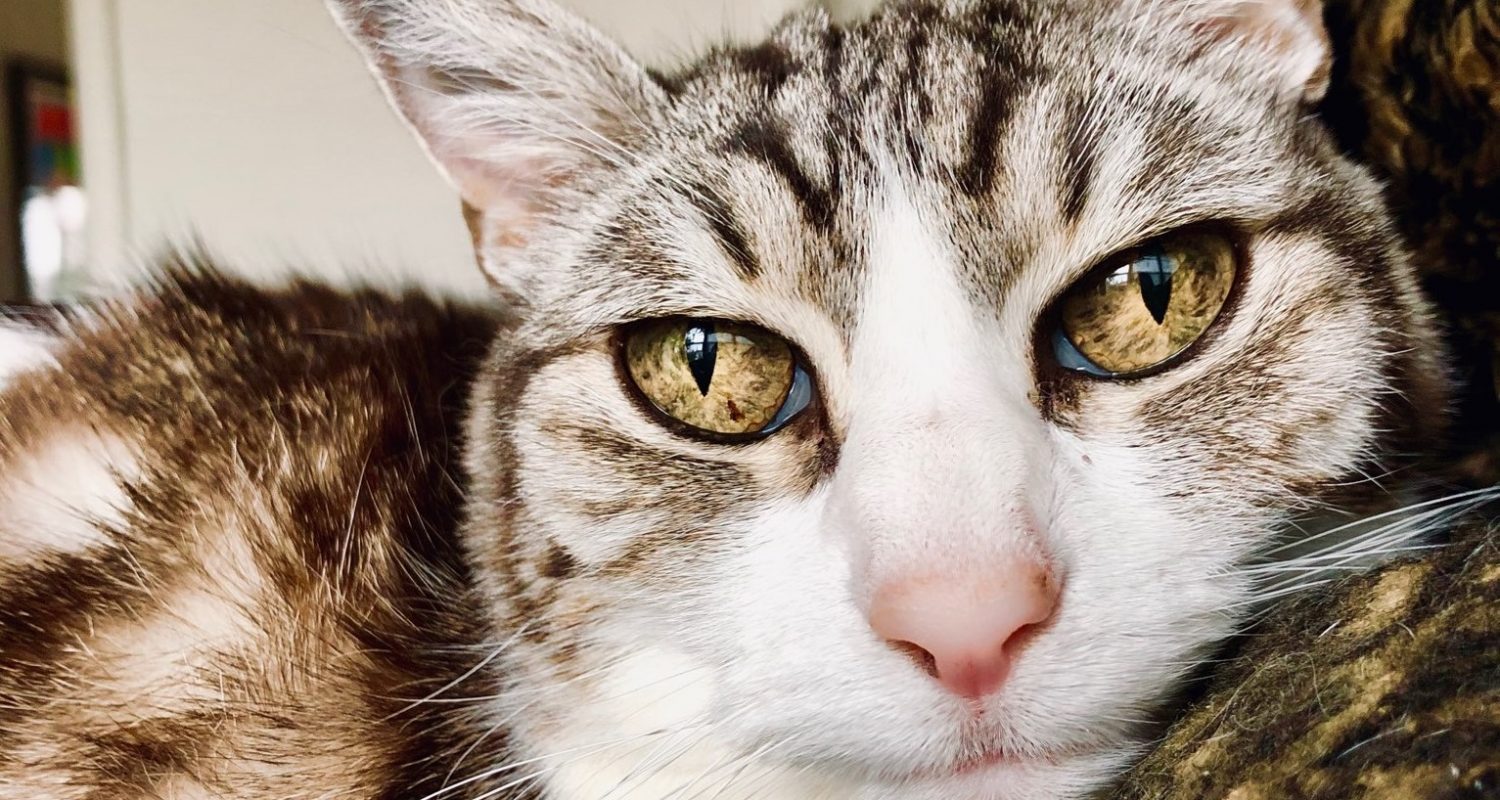
The good news for cat lovers and caregivers is that, thanks to better care and indoor living, our cats are overall, living longer lives than ever before. Due to an increase in the senior and geriatric feline population, there has been recent attention on the effects of aging, and the quality of life that senior cats experience.
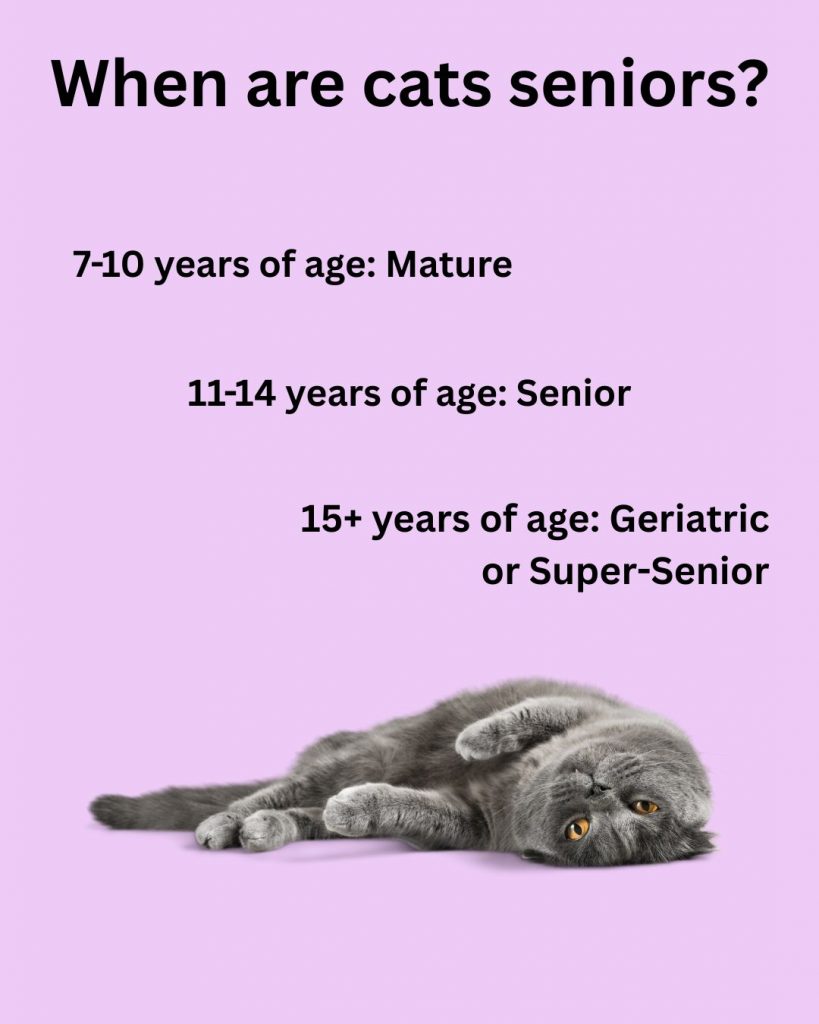
A few studies have been published in the last year focusing on different aspects of aging in cats, and in the next three blog posts, I’m going to provide you with brief overviews of two of them. In the third post, I’ll summarize some ways we can increase resilience in our own aging companion kitties.
I think we can agree that in addition to living longer, we want our cats to live well – we want them to be healthy, happy, and have a good quality of life. To help our cats live well, we need tools that help us assess how they are aging. Much of our understanding of aging in cats is based on similarities in humans, dogs, rodents and other species who have been studied in more detail.
What is Frailty? More than aging
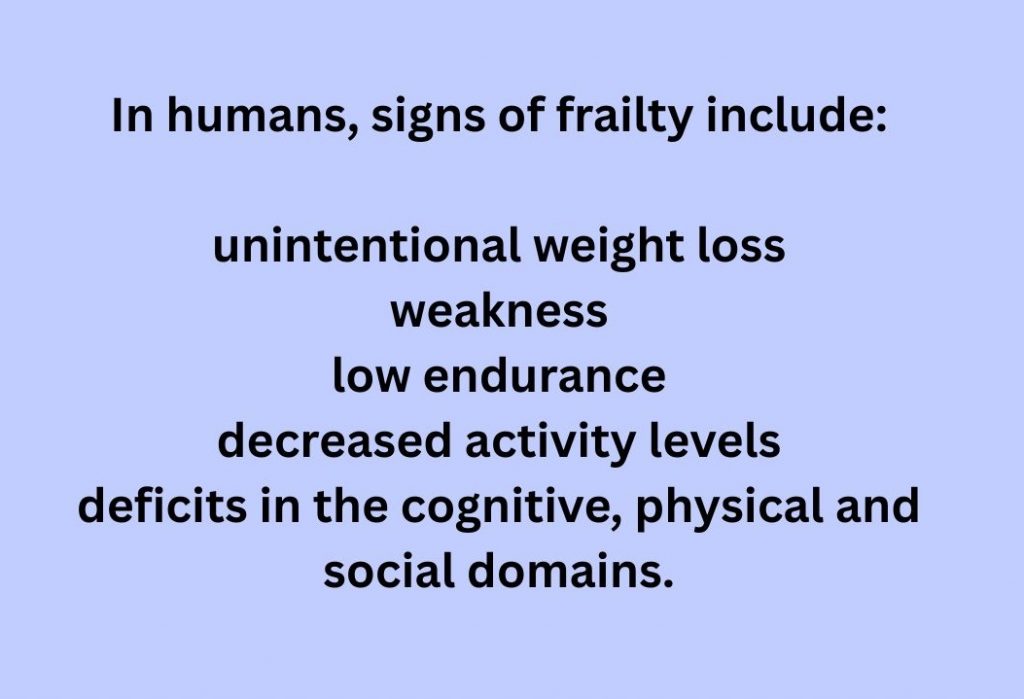
Frailty is a multi-faceted term that goes beyond aging, although it is often highly correlated with age. It is believed that 5-10% of humans over 65 are frail. Frailty is a combination of decreased physical and cognitive abilities that often increase someone’s risk of bad outcomes – such as disease, disability, and even death.
Not all individuals age the same
What is fascinating is that not all individuals age in the same way. Cats of the same ages can be very different in their health and physical ability. Of course, cats’ true ages are often not known, adding further limitations to using age as a sole measure of health.
In humans, there are dozens of tools to measure frailty. The Dog Aging Project has significantly advanced our understanding of how dogs age. But little is known about aging in cats – the time for more attention to feline aging has long passed!!
Why is understanding feline frailty important? In humans, frailty can be improved with interventions, such as medication and exercise. It is possible that with early identification, we can develop similar interventions for our beloved senior kitties. Further, by understanding why some individuals “age well,” we can help more cats be resilient and experience a high quality of life as long as possible.
Can we better understand frailty in cats?
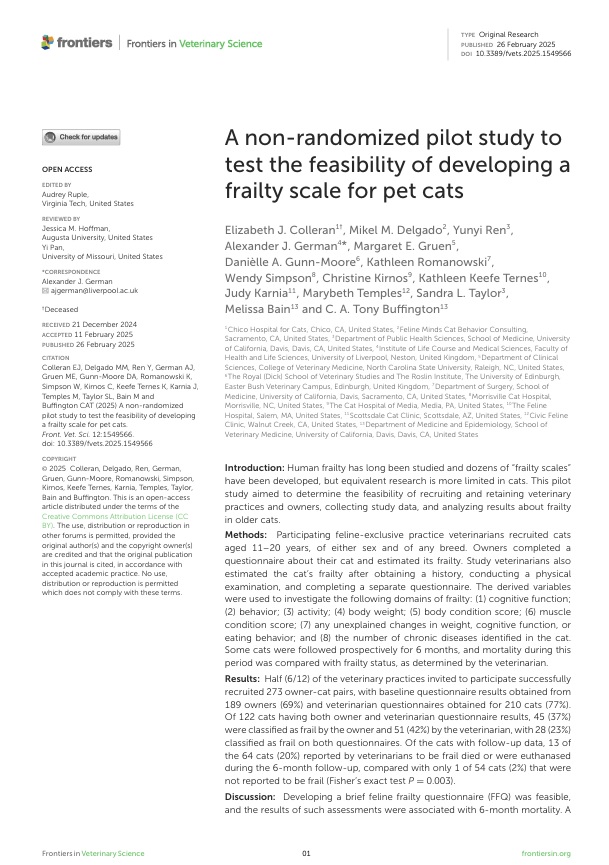
Several years ago, I was part of a team of researchers that began to develop a tool that could help us understand frailty in cats. After many pandemic-related delays, the work (“A non-randomized pilot study to test the feasibility of developing a frailty scale for pet cats”) was finally completed and published last year. The goal was to create a measure that was easy to use and could accurately identify frail individuals.
We surveyed 189 caregivers of cats between 11 and 20 years of age. We also worked with veterinarians from cat-only clinics who assessed 210 senior cats. We had 122 cats with both a caregiver survey and veterinary assessment, allowing us to see where there was agreement in identification of frailty.
Methods of the study
The caregiver survey included questions about behavior (use of scratching posts, play), physical abilities (e.g., jumping, climbing), cognitive and emotional changes, as well as physical changes such as weight loss. Veterinarians assessed cats for changes in weight and muscle condition, and noted if the cat had any medical conditions. Both caregiver and veterinarian were asked “Do you think this cat is frail?” We also followed up on as many of the cats as we could six months later to find out if the cat was still alive.
Results: Signs of frailty in cats
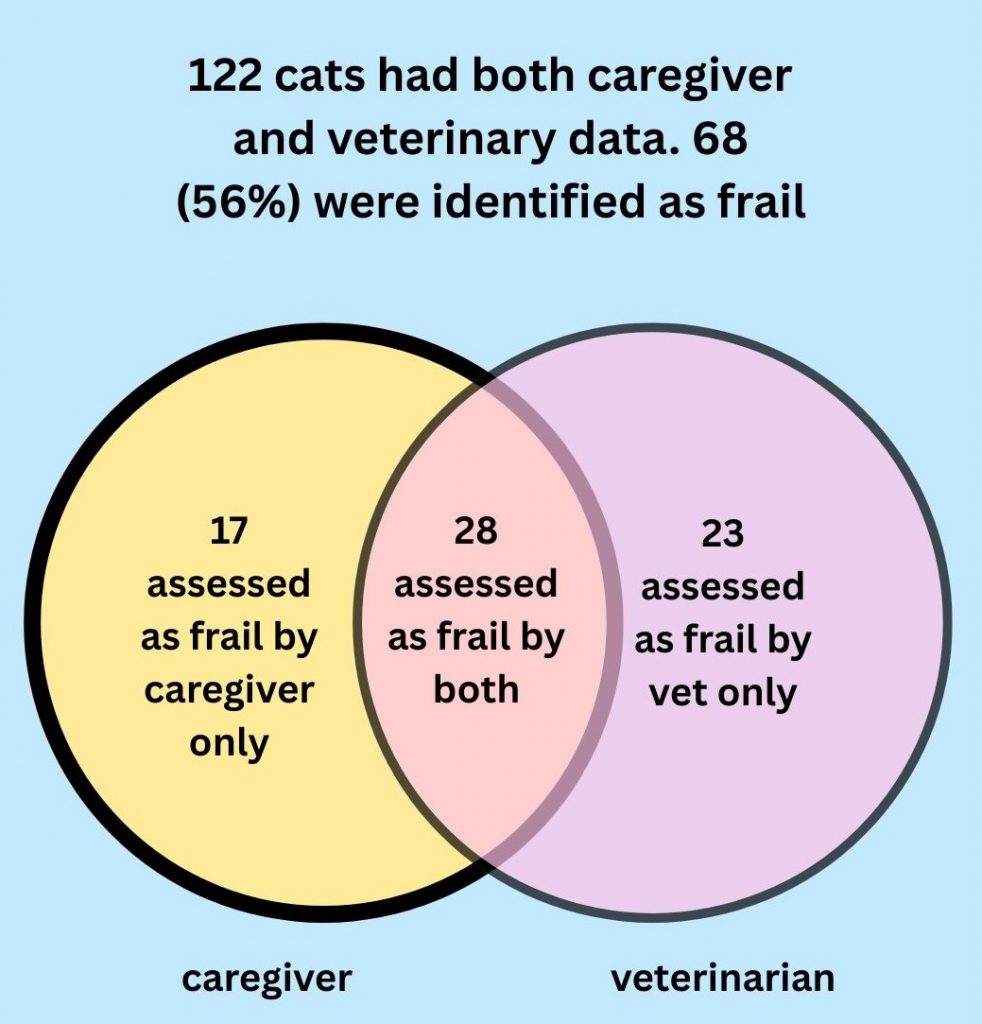
Caregivers were more likely to say their cat was frail if they hesitated or avoided jumping, groomed less, had changed eating habits, were using their climbing and scratching structures less, and seemed like they “enjoyed life” less. Frail cats were older than non-frail cats.
Veterinarians identified cats as frail if they had weight and muscle loss, fatigue, poor claw condition, and signs of cognitive changes. They were also more likely to have one or more diseases such as thyroid or heart disease).
Results: Veterinarian-identified frailty was associated with increased mortality
When veterinarians identified cats as frail, they were more likely to die within six months. Of follow-up data on 118 cats, 64 were labeled as frail, and 13 (20%) died within the follow up. Of the 54 cats who were not labeled as frail, only one died within six months.
More research is needed
We hope that our preliminary work leads to more work in this area. Unfortunately, research funding is challenging to come by, but we were able to demonstrate that the concept of frailty can be applied to cats, with some predictive ability related to mortality. Our survey would need to refined and tested in a larger population before ready for “prime time,” but there are clear physical and cognitive changes, and many of these changes are similar to those identified in other species as being important to the identification of frailty!
Because our cats’ can hide pain and often don’t see the veterinarian yearly, the signs of aging may pass us by. With tools that can help us assess aging, hopefully we can provide our cats with the best environment and care to help them thrive…for a very long time.
References
Bellows, J., Center, S., Daristotle, L., Estrada, A. H., Flickinger, E. A., Horwitz, D. F., … & Shoveller, A. K. (2016). Aging in cats: common physical and functional changes. Journal of Feline medicine and surgery, 18(7), 533-550.
Colleran, E. J., Delgado, M. M., Ren, Y., German, A. J., Gruen, M. E., Gunn-Moore, D. A., … & Buffington, C. T. (2025). A non-randomized pilot study to test the feasibility of developing a frailty scale for pet cats. Frontiers in Veterinary Science, 12, 1549566.
Hua J, Hoummady S, Muller C, et al. Assessment of frailty in aged dogs. Am J Vet Res. 2016; 77(12): 1357-1365.
Melvin, R. L., Ruple, A., Pearson, E. B., Olby, N. J., Fitzpatrick, A. L., & Creevy, K. E. (2023). A review of frailty instruments in human medicine and proposal of a frailty instrument for dogs. Frontiers in veterinary science, 10, 1139308.
Mohler, M. J., Fain, M. J., Wertheimer, A. M., Najafi, B., & Nikolich-Žugich, J. (2014). The Frailty syndrome: clinical measurements and basic underpinnings in humans and animals. Experimental gerontology, 54, 6-13.

One thought on “Helping the aging cat: Understanding frailty”