
I tend to stay away from the topic of WHAT people should feed their cats because I’m a behaviorist, and because, wow, nothing gets people’s hackles up more than talking about cat food.
Raw diets are both popular and controversial. They are often chosen because they are considered “more natural” as they are less processed and contain whole uncooked ingredients (although some raw diets also include supplements that are not raw).
While there are potential benefits of feeding a raw and/or minimally processed diet (e.g., caregivers report improved stool and coat quality), the existing research is inconclusive about these benefits. For example, there have been inconsistent findings related to digestibility of raw vs. commercial diets, although cats and dogs fed raw diets have different microbial diversity (with many more studies in dogs than cats). It’s also unclear whether the perceived benefits of raw diets could be achieved in other ways (e.g., cooked fresh diets, better control of protein sources).
The main concerns about feeding raw diets to cats are the health risks, including the OneHealth implications: A key focus of OneHealth is zoonotic diseases (diseases that can be spread between humans and other animals).
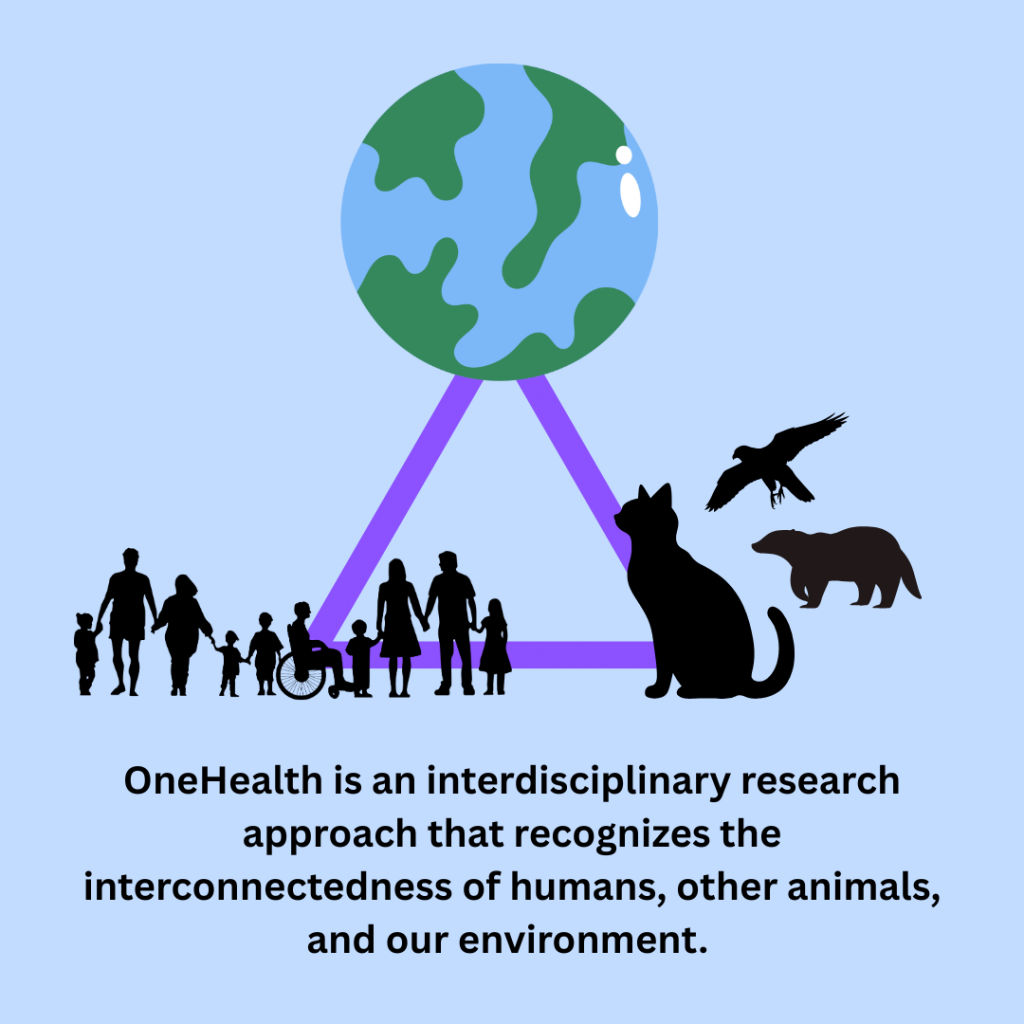
People choose this diet because they want better health for their pets. Raw diets, when done correctly, can meet our cats’ nutritional needs. But there are risks to both humans and our pets due to zoonotic bacteria, viruses and parasites. Our cats are not immune to these risks, despite the oft-cited pH of the cat’s gastrointestinal environment and their short digestive tract as protective factors. Cats have still been infected by bacteria and viruses from raw diets, including cats who have recently been infected by and died from avian influenza (bird flu).
A new study, “Analysis of the microbiota of raw commercial feline diets to prioritize food safety investigations,” examined several commercially-available raw, freeze-dried and conventional (kibble or canned) cat foods to better understand the bacterial species that are present in these diets. They also sought to better understand, from a OneHealth perspective, the potential risks these bacteria may pose. I communicated with lead author, Dr. Guillaume Reboul, to get further information about their study.
Research Methods
To conduct the study, researchers purchased 112 different commercially-available cat food products from major online vendors and grocery stores. Twenty-seven “conventional” (22 canned and 5 kibble) products, and 85 raw products (3 refrigerated, 25 frozen, 8 kibble and 49 freeze-dried) were purchased and tested.
- Genetic testing was used to determine if the protein source in the foods matched what was on their labels.
- The researchers used sequencing, a form of genetic testing, to determine whether traces of specific bacteria were present in the purchased food samples.
- The researchers wanted to know if the food products could present a risk to anyone handling them, by determining whether the bacteria could grow in the laboratory (be cultured).
Results of the study
Did the protein sources match?
Raw products were more likely to be correctly matched, with just 6 out of 83 (7%) of the raw products that were protein checked having major discrepancies between what was on the label and what was in the food. Canned conventional food had the highest rate of discrepancies (8 out of 21 foods, 38%) having meats (primarily pork, chicken and turkey) that were not on the label. Three out of 13 conventional kibble products (23%) had mismatched labels to ingredients.
Presence of bacteria in tested cat foods
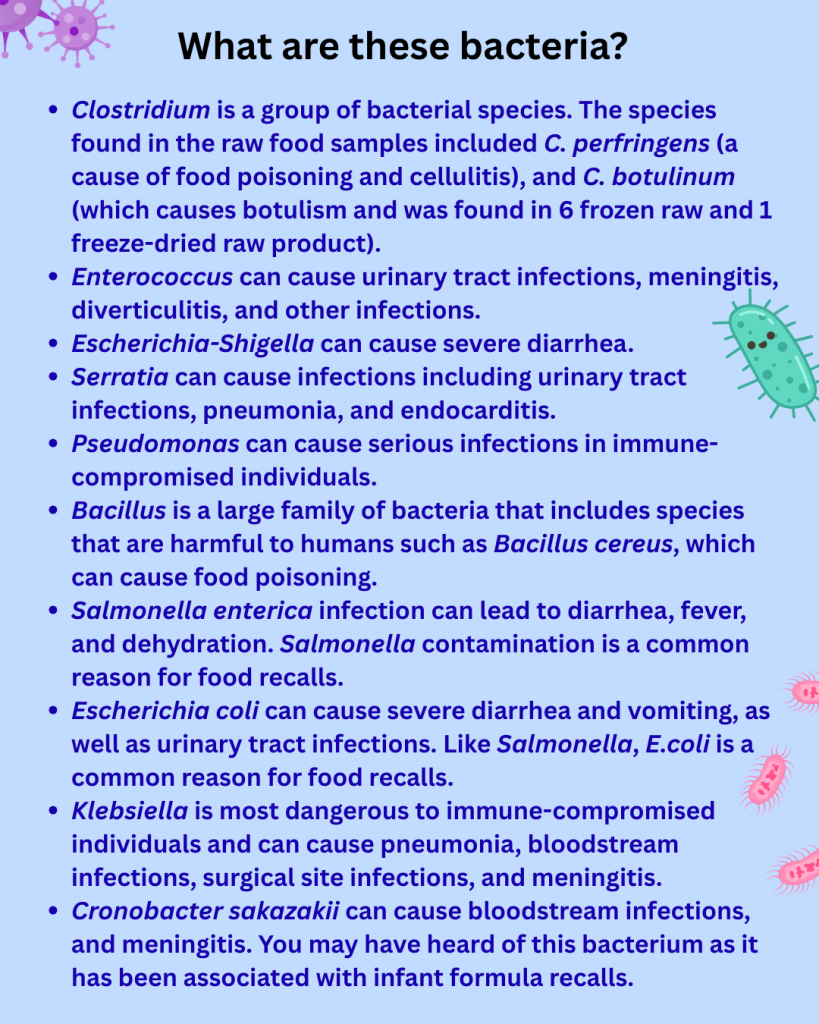
Raw and freeze-dried products had significantly more bacteria species present compared to the conventional products.
Raw products were more likely to contain Clostridium sensu stricto 1 (most prevalent in freeze-dried raw), Enterococcus (mostly found in freeze-dried raw and one conventional kibble), Escherichia-Shigella, Serratia, and Pseudomonas. Bacillus was found in both raw and conventional cat foods.
Sixteen-percent of frozen raw products also contained Salmonella enterica. The researchers also found E. coli (frozen raw), Klebsiella (freeze-dried and frozen raw), and Cronobacter sakazakii (raw kibble).
Could the bacteria be cultured?
Raw and freeze-dried foods were more likely to result in cultured bacteria samples. These foods harbored bacteria that had survived the industrial processes and could infect others.
Drug resistance observed in bacteria
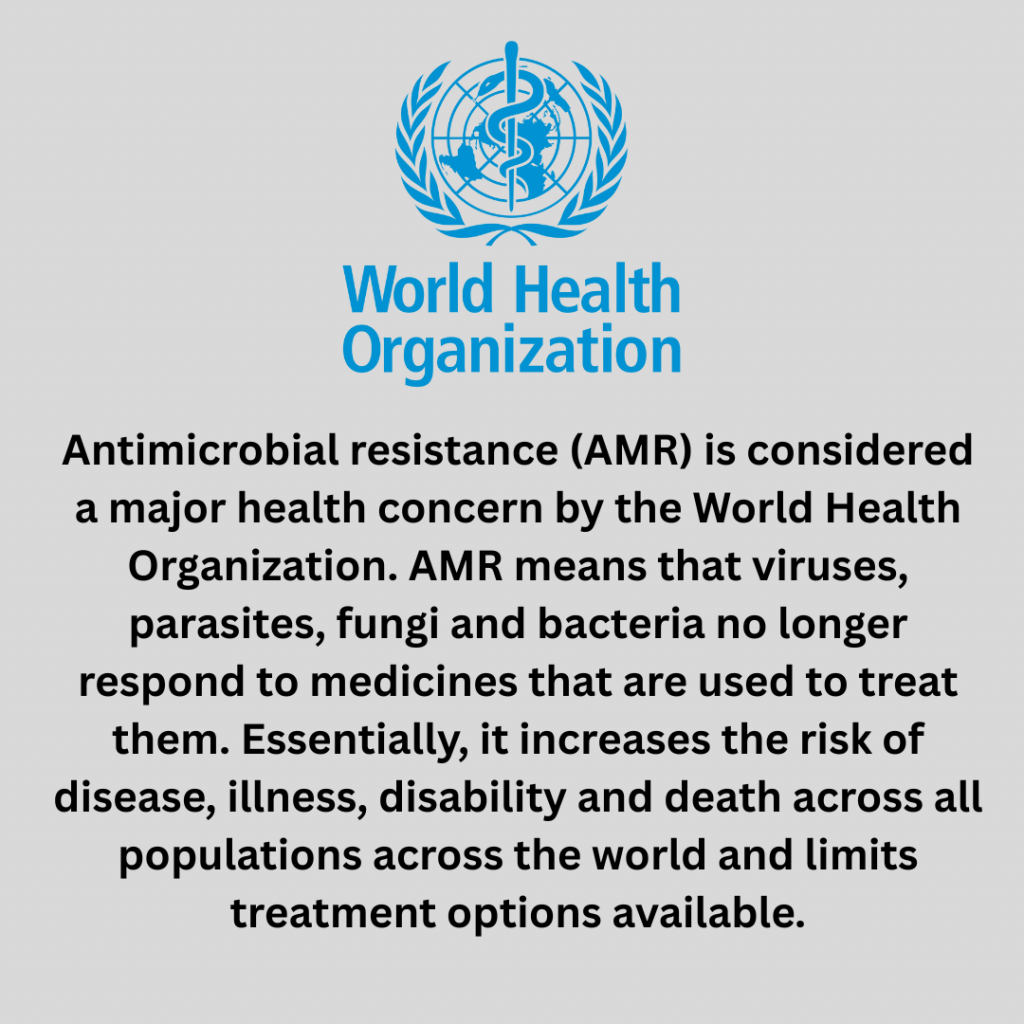
Because some of the bacteria detected in the tested cat food could be harmful to cats AND humans, the researchers also wanted to know if these bacteria were resistant to the drugs (antimicrobials) that are often used to treat infections.
In the current study, 91 of the food samples had at least one antimicrobial resistance gene (ARG) present. Raw and freeze-dried foods were much more likely to have ARGs. These genes can be transferred into the gut microbiota of individuals in a home, both human and feline.
Freeze-dried pet food concerns
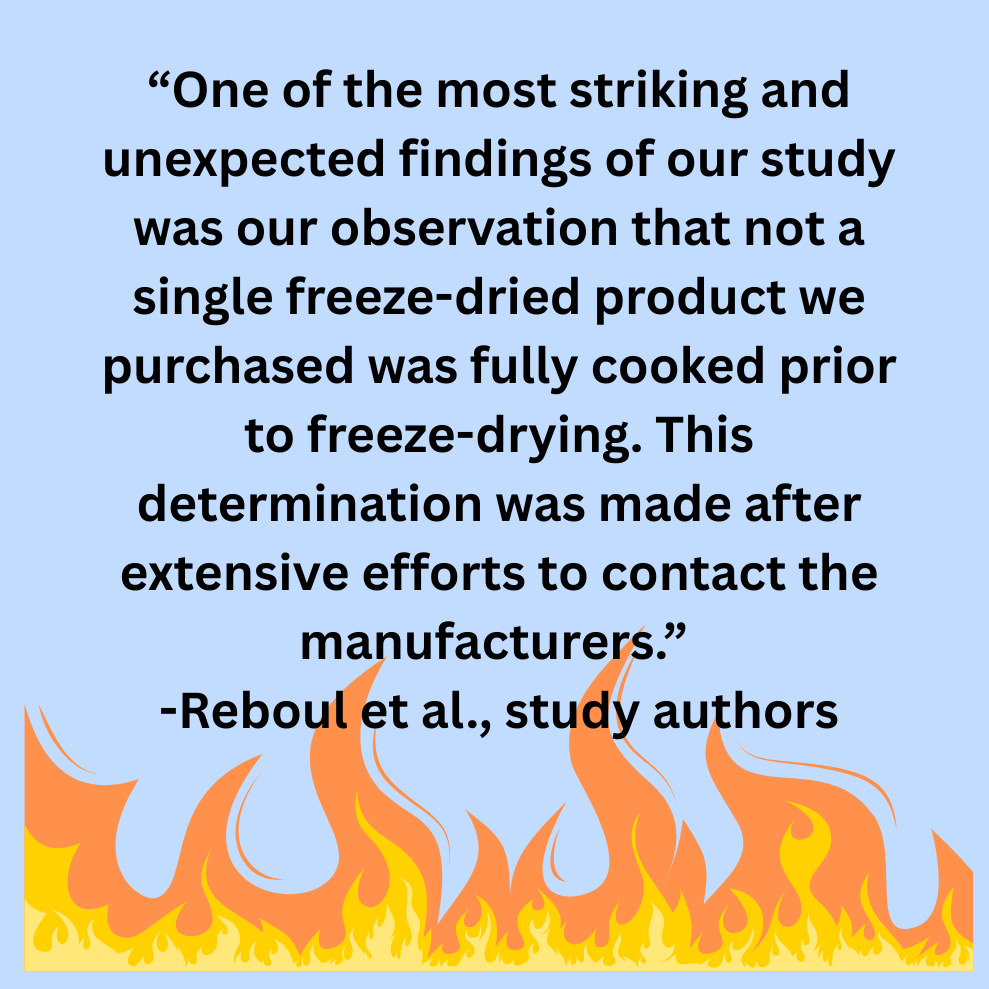
No freeze-dried products that were tested were fully cooked, yet only a few of the products were labelled as raw. The freeze-dried products were associated with more antimicrobial resistant genes and diverse zoonotic bacteria. Because these products are sold and stored for long periods at room temperature, the potential for bacterial viability, growth and subsequent infection is higher. Because they are often not labelled as raw, pet caregivers may not handle them as carefully as they would if they were aware they were not fully cooked.
To summarize the findings
Raw and freeze-dried diets analyzed in this study had larger amounts of viable, potentially harmful bacteria, many of which have zoonotic potential. Many of these bacteria were drug-resistant strains, which could theoretically be transferred to companion animals and humans living with them.
Protein sources in cat food
Why was there a higher mismatch of protein source with what was on the product label in the commercial diets? Given that many pets may have food sensitivities or allergies, the pet food industry needs to take steps to ensure that labels accurately reflect what is in the food. Dr. Reboul mentioned that the tests they conducted for DNA fragments are very sensitive. The processing that canned food undergoes can also cause some DNA deterioration, leading to some false positives for different protein sources. Further investigation of this issue is needed.
Minimizing risks when feeding raw or freeze-dried
My goal is not to convince you there’s one right or wrong way to feed your cat, but to know the risks and safety precautions you can take should you choose to feed your cat any raw food as part of their diet. Not taking appropriate precautions when handling raw food increases the risks of both human and non-human infections.
Safe handling of raw and freeze-dried diets
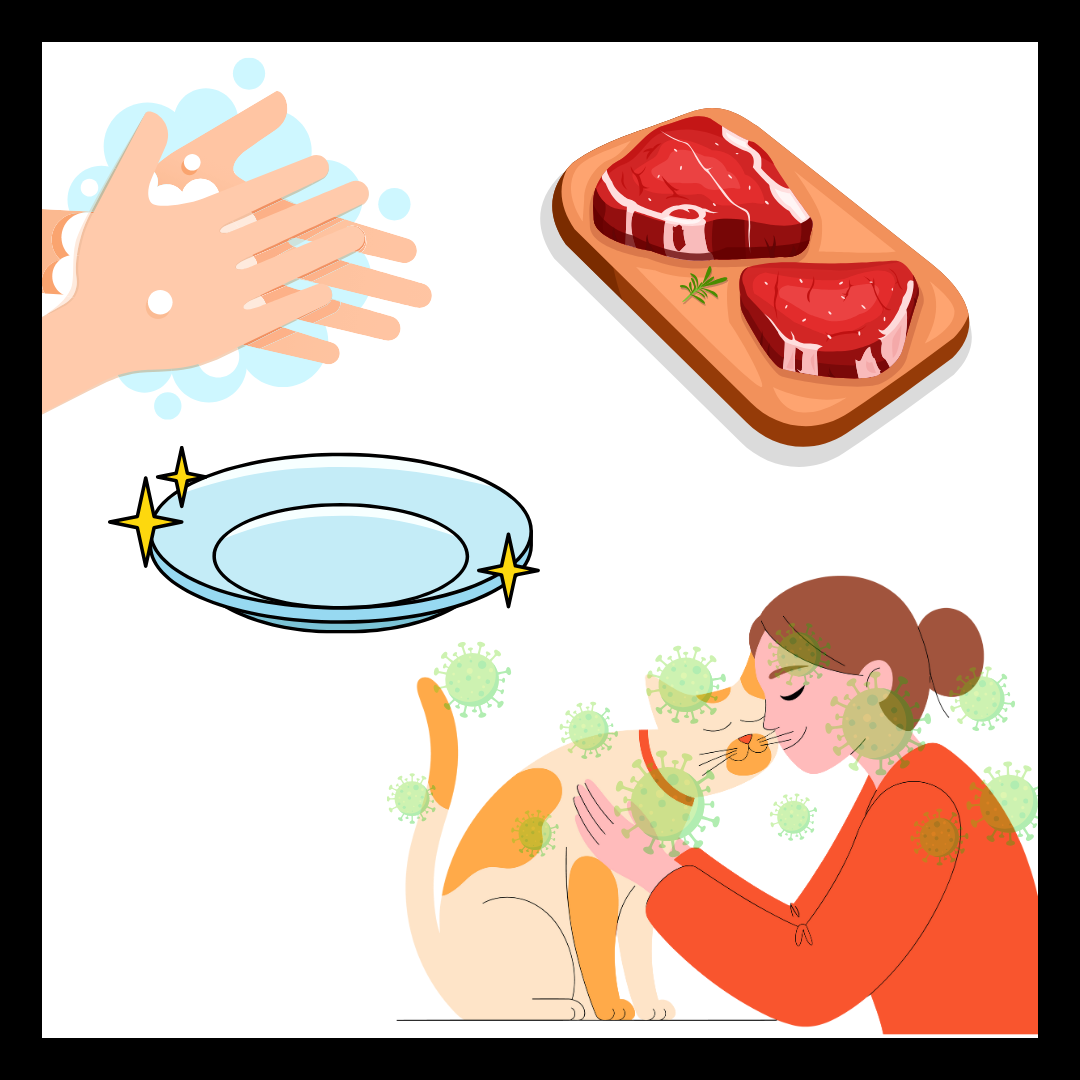
Studies have found that most people do not know about the risks of raw pet food or how to handle it properly. Here are some guidelines for handling these products safely:
- Wash your hands thoroughly after handling these foods or touching potentially contaminated surfaces including countertops, kitchen utensils, feeding bowls, and cutting boards.
- Clean and disinfect all surfaces and objects that come into contact with raw pet food.
- Don’t rinse raw meat or raw meat products as this can cause splashing and spread of bacteria.
- Store and thaw raw diets in the refrigerator.
- Refrigerate or discard any raw food your pet does not eat right away.
A side note, you may want to avoid kissing your pets, especially on the mouth, if they are fed raw or freeze-dried food.
Being a sensible shopper
Dr. Reboul emphasized that their study was anonymous and they did not intend their findings to be associated with the practices of any specific food brand. That didn’t stop me from doing my own digging.
One struggle I have had is determining whether freeze-dried treats are cooked or not. I reached out to a few of these companies and also looked through their public-facing content to try to learn more. As an example, this is text from two different areas of the PureBites FAQs page:


Hmmmm….are their products not cooked or not raw? I couldn’t get much clearer information from other companies. BIXBI pet, whose website describes their food as “Rawbble Freeze-Dried Food for Cats provides highly digestible complete and balanced raw nutrition with the convenience of shelf-stable kibble” sent this email when asked about avian flu: “We have implemented a temporary thermal kill step at the FDA required temperature to inactivate Avian flu virus“
Another company, CatManDoo, says “These savory treats are made from USDA-inspected, all-white breast meat chicken, carefully and fully cooked, then freeze dried to preserve flavor, texture, and nutrients.” When asked they replied that their food was “cooked to 75 degrees Celsius” but would not specify for how long or by what cooking method. Dr. Reboul expressed that they had faced similar challenges.
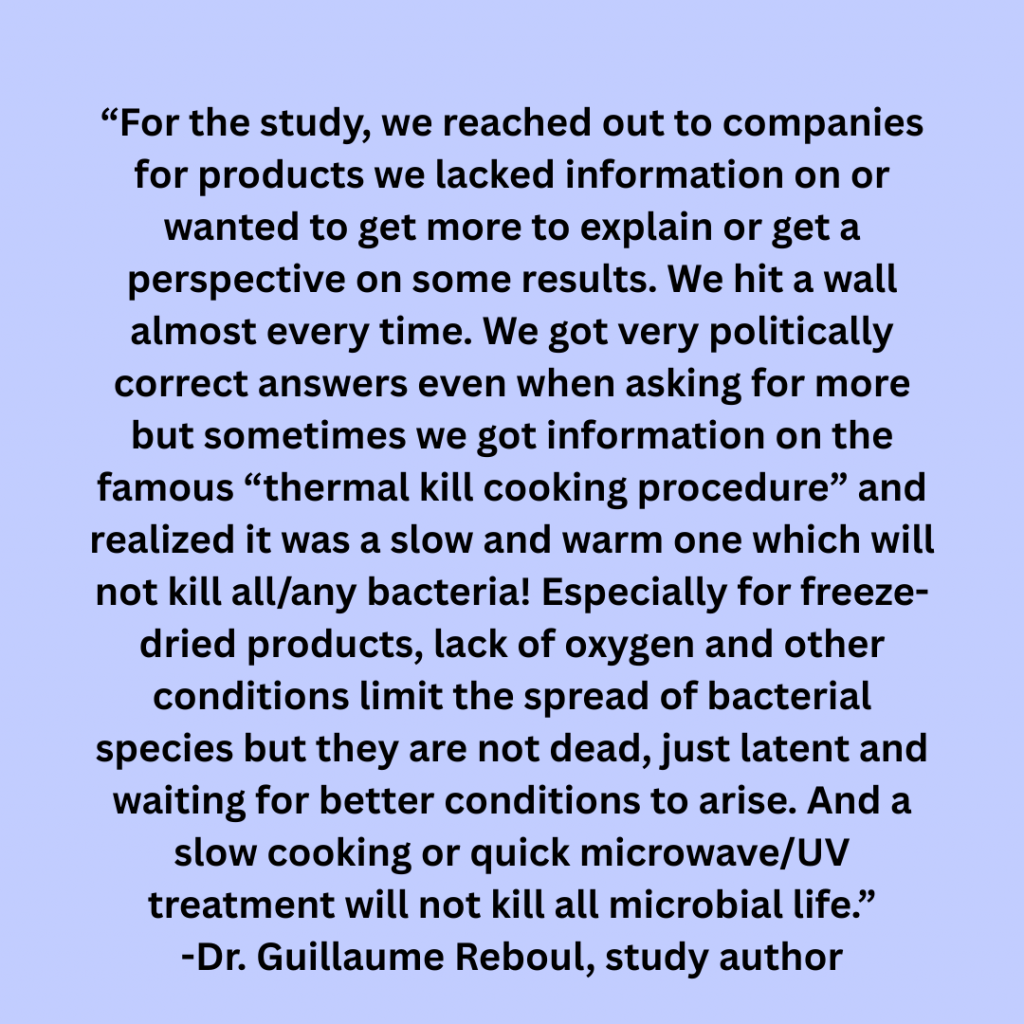
So buyer beware! I have since decided to stop using freeze-dried treats with my own cats. Regardless of whether you choose to feed your cats raw or conventional food, we all should feel confident that when we buy food for our cats, the label accurately tells us what is in the food, and whether the food is raw or cooked! The treatment of freeze-dried diets and treats as “safer” than raw diets is a mistake, based on the findings of this research.
A very special thank you to Joey Lusvardi for his helpful feedback on this post!
Resources:
Should you want more evidence-based approaches to feeding, pet nutrition and raw diets, here are some resources I recommend:
SkeptVet Science-Based Pet Health https://skeptvet.com/category/nutrition/
Tips for Safe Handling of Pet Food and Treats | FDA
References:
Carter, R. A., Bauer, J. E., Kersey, J. H., & Buff, P. R. (2014). Awareness and evaluation of natural pet food products in the United States. Journal of the American Veterinary Medical Association, 245(11), 1241-1248. https://avmajournals.avma.org/view/journals/javma/245/11/javma.245.11.1241.xml
Freeman, L. M., Chandler, M. L., Hamper, B. A., et al. (2013) Current knowledge about the risks and benefits of raw meat based diets for dogs and cats. Journal of the American Veterinary Medical Association 243, 1549-1558
Lyu, Y., Wu, C., Li, L., & Pu, J. (2025). Current evidence on raw meat diets in pets: a natural symbol, but a nutritional controversy. Animals, 15(3), 293. https://www.mdpi.com/2076-2615/15/3/293 Reboul, G., Malkowski, A. C., Yu, Y. T., Gu, Y. M., Sams, K. L., Umbarger, J. M., … & Goodman, L. B. (2025). Analysis of the microbiota of raw commercial feline diets to prioritize food safety investigations. Communications Biology, 8(1), 1349. https://www.nature.com/articles/s42003-025-08756-8
Reboul, G., Malkowski, A. C., Yu, Y. T., Gu, Y. M., Sams, K. L., Umbarger, J. M., … & Goodman, L. B. (2025). Analysis of the microbiota of raw commercial feline diets to prioritize food safety investigations. Communications Biology, 8(1), 1349. https://www.nature.com/articles/s42003-025-08756-8
Heading photo by Alexas_Fotos Via Pixabay
This is a wonderfully informative article on raw and freeze-dried as well as canned and dry cat foods. I am an experienced cook for humans in kitchens that are rigorously inspected and I follow all the regulations at home, though I am personally primarily vegetarian. Years ago I fed dry exclusively, in the 90s changed to canned exclusively, fed raw exclusively 2012-2015 starting with commercial then making my own diet from local sources, then added a mix of commercial wet foods, occasional raw foods, adding home-cooked foods about six years ago. I also use freeze-dried meat treats. I stopped all raw or freeze-dried raw when avian flu showed up in cat food and only feed canned and home-cooked.
I wanted to continue with the freeze-dried meat treats because they are so good as rewards, especially when socializing feral kittens and calming traumatized cats. I found Whole Life Just One chicken is the only one that stated the chicken (though not other meats) is fully cooked:
“Are your products cooked or raw?
We use a combination of cooked and raw ingredients. All poultry is fully cooked prior to being freeze dried. Our salmon, tuna and liver are raw prior to being freeze dried. Our shrimp is fully cooked. All of our products undergo a proprietary lethality step in the final phase of freeze drying, where we heat the internal temperature of our treats, meals and supplements to 165º F to ensure they are free from any harmful pathogens.”
Of course, other raw meats in the same plant could contaminate anything else that came in. I still use them, though, and I always wash my hands before and after I handle food anyway. I find most people don’t really think about it.
I really love your science-based articles and presentations!
Hi Bernadette, I’m sorry to be the bearer of bad news, but that is the same language that all companies who make freeze-dried treats use (75C is 165F). The researchers behind the study do not feel that the cooking method described is sufficient to kill bacteria, especially for a product that will be stored at room temp once opened.