Our cats are living longer than ever, but are they aging well? And are we as caregivers providing them with an environment that supports them and provides what cats need for good welfare, regardless of age?
A new study looked at reported behavior changes as cats age. The researchers also explored the living conditions that cat caregivers provide for their older cats. The study, A day in the life of an aged cat – Environment of old domestic cats and welfare implications, was recently published in the Journal of Veterinary Behavior.
The researchers were specifically interested in cats who are mature (8-10 years), seniors (10-14 years) or super seniors (15+ years). Participants filled out a survey with questions about:
- their home and cat (demographics)
- signs of pain and frailty (see my previous blog post for more on this)
- the cat’s behavior
- the bond the caregiver had with their cat
- the cat’s nutrition and environment
Over four hundred caregivers completed the survey. There were 110 surveys about mature cats, 239 about seniors, and 92 surveys about super seniors. The majority were current on vaccinations (66%) and 57% of the cats were described as “in good health.” Over a third were overweight or obese, and 9% were underweight.
Super senior cats were more likely to be in poor health, with higher pain and frailty scores. Only a minority of cats in each age group were described as having difficulties grooming themselves (4% of mature cats, 15% of seniors, and 37% of super seniors). Around a third of mature (28%) and senior (32%) cats eliminated outside the litter box. Forty-six percent of super seniors at least sometimes avoiding the litter box.
Our cat Clarabelle enjoying her vertical space. She was 16 at the time.
The results related to the environments provided for older cats were very revealing. The older the cat, the less likely they were to be provided with puzzle feeders, olfactory enrichment or elevated resting areas.
Super seniors were much less likely to play with toys than senior or mature cats. More caregivers of super seniors were likely to say they didn’t play with their cat at all. However, all age groups more than half of cats would play (mature – 93%, senior – 86%, and super seniors- 63%)! So don’t forget to play with your senior kitties!
The most commonly offered toy was a wand toy/fishing rod – offered by 20-25% of caregivers depending on age category. Small numbers of caregivers offered other toys, such as balls and mice. Hand play was also surprisingly popular (10-12% of caregivers).
What was unclear from the survey was whether the cats play less because of aging, or because the caregiver is providing them less enrichment. Are cats not using elevated spaces because they are not accessible (e.g., via ramps or pet stairs) or not offered? Are senior cats missing the litter box because it’s too far away or hard to get into?
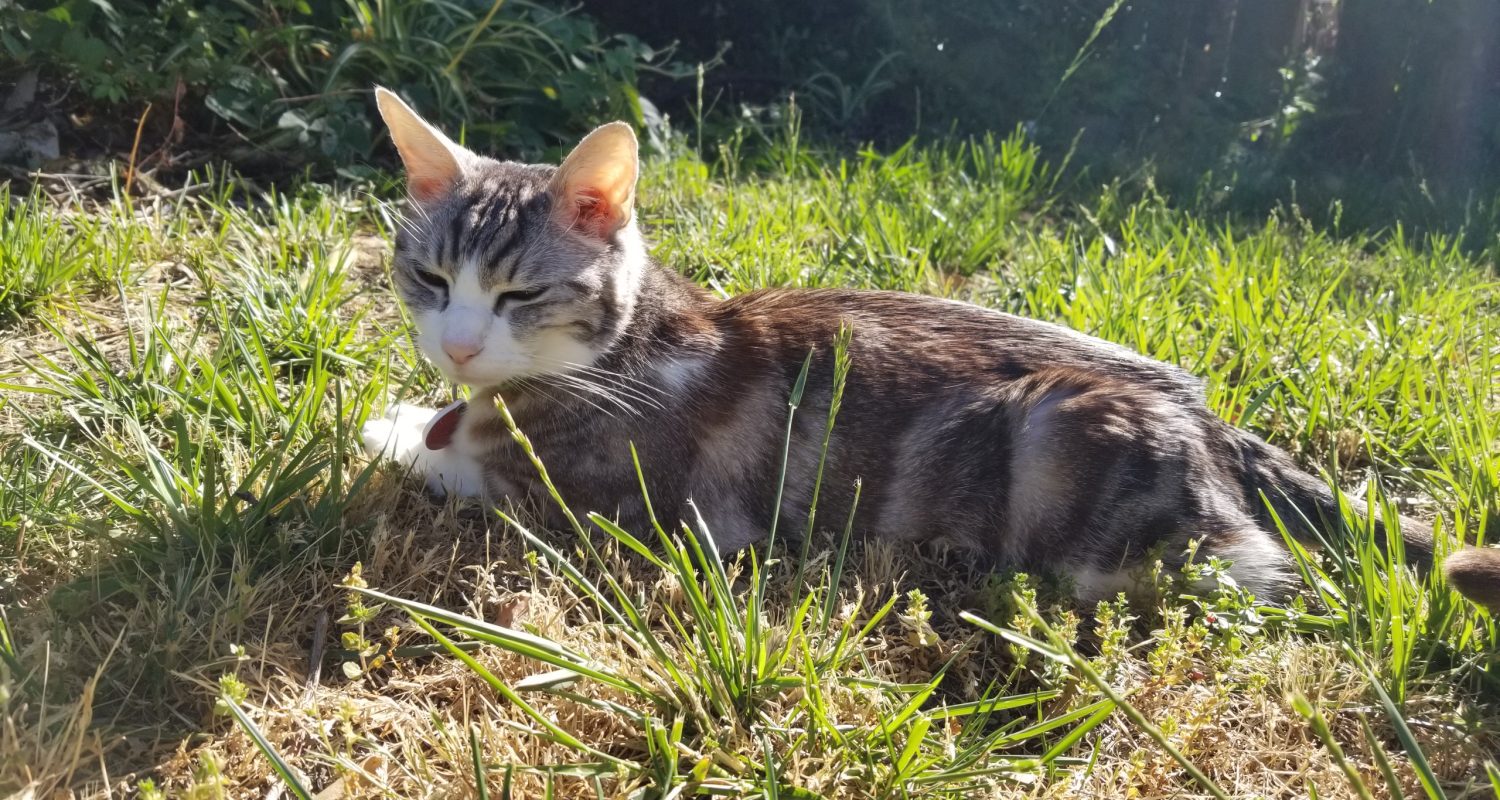
Clarabelle (super senior!) playing with some grasses during supervised outdoor time.
From this study, we can conclude that seniors and super seniors experience declines in health that impact their behavior. They express fewer behaviors that would suggest engagement with their environment. They are also less likely to have enrichment opportunities such as play, olfactory stimulation or puzzle feeders.
Caregivers may mistakenly think that as their cats age, they need less. I would instead argue, that they need more – more accommodations so they can continue to enjoy all the parts of their environment that bring them happiness.
This study is one of, if not the first, to focus on how senior cats experience their environment. It’s an important publication that raises many questions for future studies. It also provides food for thought on how we can continue to educate caregivers on helping their senior cats thrive and age well.
In my next post, I’ll focus specifically on the many things that we can do to help support our cats as they age! Stay tuned!
Reference
Hoummady, S., Rameau, O., Besegher, A., Bedossa, T., Sarah, J., Anton, P., … & Robles, M. (2025). A day in the life of an aged cat–Environment of old domestic cats and welfare implications. Journal of Veterinary Behavior.