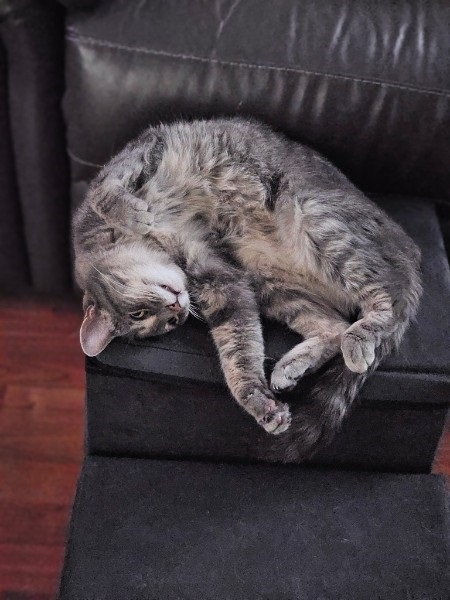
As previously mentioned in this series on helping aging cats, not all cats age the same. And although frailty is not the same thing as aging, aging cats are more likely to be frail.
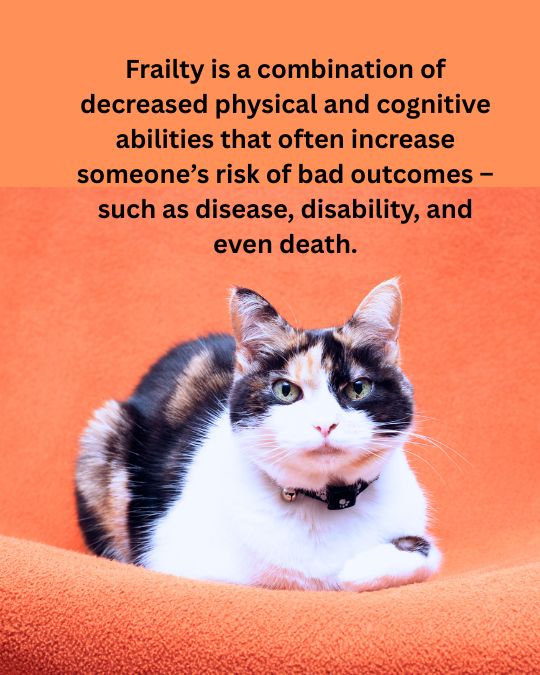
My previous blog posts have discussed ways we can identify frailty, as well as the types of environments that caregivers provide for their aging cats. Research in humans suggests that frailty can be reversed, with interventions including exercise, cognitive enrichment, and medical treatment. I believe that many of us could be doing more to help our cats age well – and perhaps prolong life or reverse some of the signs of frailty that we might see. The important thing is recognizing frailty early, providing older cats with stellar health care, and to make environmental changes that benefit older cats.
Here are five things you can do to help your aging cat AGE BETTER.
Play with your senior cat!
Although they don’t always play as much as younger cats, senior cats need playtime too! You may have to modify the play to match the energy level and abilities of your senior. I wrote about this in some detail in my book PLAY WITH YOUR CAT!. Remember that for cats, play is practicing hunting – a natural, instinctive behavior that cats use to survive. We can simulate play by choosing the right toys and moving them like prey. For senior cats, they may just watch, or bat at a toy a little bit…which is great! Any engagement is a positive sign!
Provide problem-solving opportunities
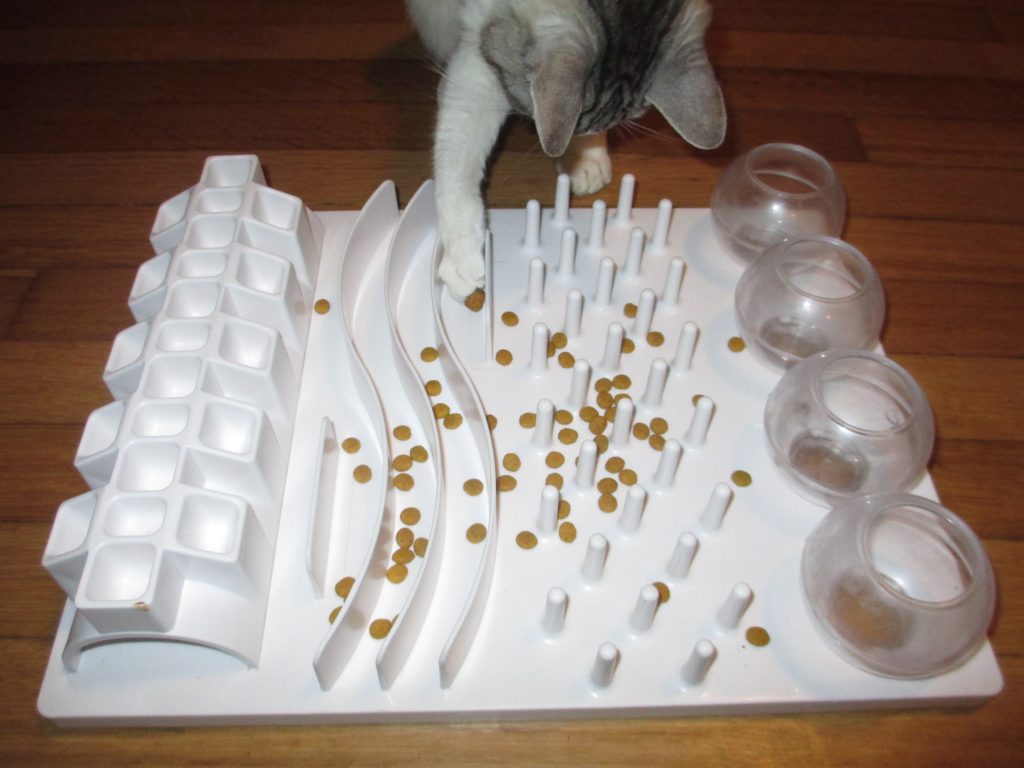
Food puzzles are one great way to give your cat the chance to work for their food, providing them with mental stimulation and challenge. As my own research has shown, not all cats prefer to work for food, so food puzzles should be tailored to your cat’s abilities and food motivation. For highly active and motivated cats, they can be used for all or most food, and for less interested cats, treats may be an effective way to encourage food puzzle use.
I’m also a big fan of positive reinforcement-based training to keep your cat’s brain sharp. Whether you train basic tricks or useful skills like going into their carrier, your relationship with your cat will benefit from a little clicker training. catschool.co is one of my favorite resources.
Optimize the environment
Your senior cat needs easy access to valuable resources, such as litter boxes, beds, food and water. This means close to where your cat hangs out (no litter boxes in the basement or garage please)!
You can make vertical spaces, such as human furniture and cat trees, more available to your cat with ramps or pet stairs.
If your cat is experiencing some sensory decline, they may appreciate a night light to help them navigate at night.
And almost all cats find a heated bed soothing, but a senior cat with achy joints will especially love them.


Pet steps are a great addition to your senior pet home! Photos by Erin Enders.
Feed for aging
Older cats typically need a calorie-dense and highly-digestible food. Your veterinarian can guide you as to the best options for your senior cat, especially if they have health issues that require dietary adjustments.
Research has shown that older cats also prefer gently warmed food – so a few seconds in a warm water bath or microwave can make food more appealing to your cat.
Elevated food and water dishes are easier to eat from for many older cats.
Finally, most seniors will want to eat more frequent, smaller meals, so adjust your feeding routine accordingly.
Preventative care
Senior cats should have twice yearly exams, including blood work, urine tests and blood pressure testing. Remember that changes in behavior are often the first sign of a health problem!
Because cats age at a faster rate than we do, more frequent exams increase the chances of detecting any health concerns EARLY, while they are treatable and manageable…increasing the chances of your cat experiencing a good quality of life as they age.
And don’t forget pain control – if your cat has arthritis (and many older cats do), discuss with your veterinarian how to make them more comfortable. Many diseases of older age can impact appetite and overall comfort, but there are many effective medications that can help your cat feel so much better!
To sum
Aging is not a disease, and although our cats cannot live forever, we can do many things to increase their lifespan as well as their quality of life! Hopefully this post will help you provide your senior cat with what they need to age gracefully.
Resources
Bellows, J., Center, S., Daristotle, L., Estrada, A. H., Flickinger, E. A., Horwitz, D. F., … & Shoveller, A. K. (2016). Aging in cats: common physical and functional changes. Journal of Feline Medicine and Surgery, 18(7), 533-550.
Denenberg, S., Machin, K. L., & Landsberg, G. M. (2024). Behavior and cognition of the senior cat and its interaction with physical disease. Veterinary Clinics: Small Animal Practice, 54(1), 153-168.
Ray, M., Carney, H. C., Boynton, B., Quimby, J., Robertson, S., St Denis, K., … & Wright, B. (2021). 2021 AAFP feline senior care guidelines. Journal of Feline Medicine and Surgery, 23(7), 613-638.
Ray, M., & Carney, H. C. (2021). Senior care: setting the stage for optimal feline aging. Journal of Feline Medicine and Surgery, 23(7), 611-611.

I love this so much. Thank you for sharing all these helpful old kitty tidbits!